Safety Tips

Prevent needlestick and sharps injuries

Needlestick and sharps injuries occur when needles or other sharp objects inadvertently puncture a person’s skin, and can happen “when people use, disassemble or dispose of needles,” according to the Canadian Center for Occupational Health and Safety.

Combustible dust explosions: Don’t ignore the hazard

Between 2006 and 2017, 111 combustible dust incidents resulted in 66 worker deaths and 337 injuries in the United States, according to data from the Chemical Safety Board.

Keep the flu at bay

If you think you don’t need to worry about the flu, look at the 2017-18 season and think again.

Arm, back and neck injuries prevalent among long-haul truck drivers: study

Birmingham, AL — Nearly half of all musculoskeletal injuries reported by long-haul truck drivers are to their arms, backs or necks – the majority being sprains and strains – according to a recent study conducted by researchers from the University of Alabama at Birmingham.
- Digital Partners -

FACEValue: Mechanic dies from boric acid burns

A maintenance mechanic at an aluminum foil processing facility died after being exposed to a solution of boric acid and water – estimated to be heated to about 180° F – while trying to remove a recirculation pump from its housing.

CSB extends comment period on combustible dust initiative

Washington — The Chemical Safety Board has extended to Dec. 31 its deadline for comment on a recent initiative that seeks to better understand why efforts to manage and control combustible dust hazards “have often failed” to prevent explosions.

Lawmaker seeks OSHA standard on preventing workplace violence in health care, social services

Washington — In an effort to help stem the rising rate of workplace violence against health care and social service workers, Rep. Joe Courtney (D-CT) has proposed legislation that would direct OSHA to issue a standard requiring employers in those industries to develop and implement workplace violence prevention plans.

Does your workplace have a severe weather policy?

Snow-covered or icy roads, and slick driving surfaces resulting from heavy rain – these are just some of the weather-related conditions that workers may encounter. All this severe weather potential raises the question: Should workplaces have severe weather policies?
- Digital Partners -

Incentive programs, post-incident drug testing not prohibited under electronic recordkeeping rule, OSHA says

In a memo sent Oct. 11 to regional administrators and state designees, the agency outlines examples of acceptable drug testing, and states that incentive programs that withhold prizes because of an injury are compliant “as long as the employer has implemented precautions to ensure that employees feel free to report an injury or illness.”

Incident investigations: Getting started

Workplace incidents should be actively investigated. The Canadian Center for Occupational Health and Safety points out that when incidents are investigated, “the emphasis should be concentrated on finding the root cause of the incident so you can prevent the event from happening again.”

Next Webinar

When HOP Meets AI: A New Tension for Safety Leaders

Date: Thursday July 9th, 2026

Time: 12:00pm-1:00pm CDT

Sponsored By: Intelex

Register Now

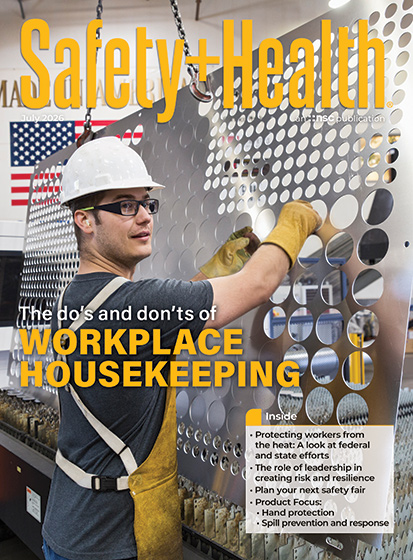
Current Issue

What's Trending

From our Partners

Earn recertification points

Board of Certified Safety Professionals

Take a quiz about this issue of the magazine and earn recertification points from the Board of Certified Safety Professionals.