

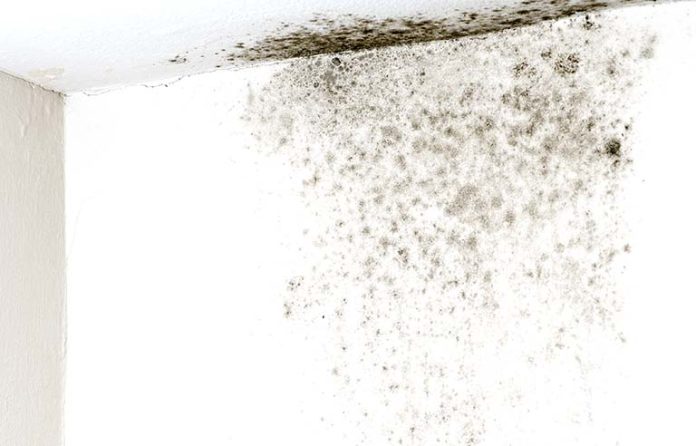
Mold is virtually everywhere. It’s on every continent, in the foods we eat (say “cheese”) and in lifesaving medicine. It plays a key role in nature, breaking down dead organic matter and keeping it from piling up around us.
Mold has been around “as long as humans have lived in buildings,” said Donald Weekes, a member of the American Conference of Governmental Industrial Hygienists’ board of directors. “It’s not going to go away anytime soon.”
For some people, mold can lead to health problems. Employers should take steps to avoid mold-related health issues in the workplace – typically respiratory symptoms – by staying up to date on facility inspections and maintenance. Those inspections are especially important for employers reopening buildings or facilities that have sat vacant during the COVID-19 pandemic.
The basics for life
Mold needs only a few elements to grow and thrive: oxygen, moisture and a food source. In buildings, it’s commonly found on materials such as the paper backing on drywall, cellulose ceiling tiles or wood framing.
The most effective control methods focus on the presence of moisture or water, which can enter buildings in various ways.
“Dampness can occur from water intrusion such as leaks in roofs, windows or pipes, and from high indoor humidity or condensation,” said NIOSH medical officer Rachel Bailey and research industrial hygienist Ju-Hyeong Park, both of whom are from the agency’s Respiratory Health Division. “Water intrusion can also occur through concrete slabs or flooding incidents.”
Brendan Moriarty, vice president of risk engineering and executive field specialist for Chubb North America Risk Engineering, and Matt Johnson, a certified industrial hygienist and certified safety professional as well as regional manager with Chubb Global Risk Advisors, highlighted some other causes of moisture issues. One is a building’s heating, ventilation and air conditioning system.
For example, improper operation of an air conditioner “can result in elevated humidity inside a facility,” Moriarty and Johnson said. “Ideally, a building’s humidity should remain below 60%, and ideally between 30% and 50%.”
Another consideration to take into account is whether the building or facility was constructed in the 1970s. Many structures built during that decade were “sealed tightly” for energy efficiency, the pair noted, which in some cases “resulted in diminished ventilation, contributing to moisture vapor buildup.”
Inspect and react quickly
The process for curbing mold growth should begin with a formal mold management strategy, Moriarty and Johnson said. This can address situations such as elevated humidity levels, roof leaks or any other sources of water intrusion such as flooding.
The strategy should include regularly scheduled facility inspections, Weekes added.
The Environmental Protection Agency, in its guidance document “Mold Remediation in Schools and Commercial Buildings,” says indoor mold growth “may not be obvious” and that it can grow on “hidden surfaces” such as the back sides of drywall, wallpaper or paneling; the top of ceiling tiles; and the underside of carpets or pads.
Hidden mold locations also may include pipe chases, utility tunnels, walls behind furniture, condensate drain pans inside air-handling units, porous thermal or acoustic liners inside ductwork, or roof materials above ceiling tiles (as a result of roof leaks or insufficient insulation).
Moisture meters are one tool that can help determine the moisture content or dampness in building materials. The meters usually feature a probe(s) that is inserted into the materials or pressed against the surface.
Any sign of water intrusion should be addressed as soon as possible, and the drying of those materials or areas should begin within 24 to 48 hours.
“The best things are prevention and immediate reaction,” Weekes said. “If you can address the water intrusion right away, that’s going to prevent or reduce the potential for most mold growth.”
NIOSH has materials to help assess signs of water damage or dampness in buildings, accessible at cdc.gov/niosh. However, your eyes and nose can be just as useful.
If you detect a musty, earthy smell in the air, it’s a good sign you might have a mold and/or water intrusion issue, said Jack Springston, vice chair of the ACGIH Bioaerosols Committee and industrial hygiene services manager at ATC Group Services LLC.
Likewise, “if you have wet surfaces and you’ve got what looks like mold growing there, it probably is,” he added.
On the other hand, what you’re seeing might not actually be mold. In some cases, Springston said, it could be efflorescence – deposits of salts on surfaces that may appear powdery or crystalline. It can indicate that your building has a chronic moisture issue that needs to be addressed.
Page 2 of 3
Reopening buildings amid the pandemic
In September, the Centers for Disease Control and Prevention released updated guidance on reopening buildings after a prolonged shutdown. Included are steps to minimize mold risk during and after that dormancy. Those steps are:
- Keep indoor humidity as low as possible, not exceeding 50%, as measured by a humidity meter. Building managers also can use a digital hygrometer, “ideally more than once daily,” to minimize the need to access the building.
- Check buildings for excess moisture or mold. Consider inspections with trained industrial hygienists who can recognize mold by sight or odor “without the need for sampling or laboratory analysis.” Building personnel also can use the aforementioned NIOSH assessment resource.
- If mold or dampness is detected, address the source of water entry first.
- If the building’s HVAC system hasn’t been active during a shutdown, it should be operated for 48 to 72 hours (also known as a “flush out” period) before workers return. Open outdoor dampers to the maximum setting that doesn’t affect desired indoor air temperatures.
- Check for odors after the “flush out” period. Assess HVAC filters and replace as necessary.
When the building is reopened and occupied again, perform routine checks of the HVAC system. Those sys-tem checks can be gradually reduced “depending on the operational and maintenance specifications for the HVAC system.”
Remediation
If you see mold, can you remove it using your own resources or should you call in outside help? Typically, it depends on the size of the mold growth.
In its “A Brief Guide to Mold in the Workplace” advisory bulletin, OSHA recommends that when mold growth exceeds 30 square feet in size, “industrial hygienists or other environmental health and safety professionals with experience performing microbial investigations and/or mold remediation should be consulted prior to remediation activities to provide oversight for the project.”
The agency also notes that some states or jurisdictions may require the use of licensed remediation companies and assessment consultants if mold growth is larger than a certain size. So, it’s wise to check local or state regulations as part of a mold management strategy and include them in written procedures.
According to OSHA, no federal standards or recommendations on airborne concentrations of mold or mold spores exist, including from EPA or NIOSH. For mold on walls and other surfaces, OSHA and EPA call for the use of “professional judgment” when deciding how to remediate mold, and each agency has guidelines based on different sizes of mold growth.
“When in doubt, caution is advised,” OSHA says. “Consult an experienced mold remediator for more information.”
Bailey and Park warn that if you suspect your HVAC system is contaminated with mold, or if it’s been confirmed, don’t let it run. They also recommend against duct cleaning “unless it is found to be contaminated with mold or other irritant particles” affecting the occupants of the building.
“Improper duct cleaning can release large amounts of dust and other contaminants, including mold spores, into the work area,” Bailey and Park said. “Fiberglass ductwork that has mold growth must be replaced – it cannot be cleaned. If metal duct cleaning is deemed necessary, it should be performed by contractors who are members in good standing of the National Air Duct Cleaners Association.”
Weekes and Springston suggest avoiding or being wary of companies that offer both mold assessment and remediation.
“There’s an inherent conflict of interest,” Springston said. “We see it, unfortunately, quite a bit, where a company will come in, do an assessment and say, ‘Well, we can fix that and do the remediation for another $5,000,’ or however much. Assessment and remediation should be separate.”
Clean it up
In its guidance document, EPA provides a flowchart for mold remediation efforts, along with information on cleanup methods, personal protective equipment and containment. Cleanup methods include the use of a detergent-water solution, wet vacuum or HEPA vacuum. The document also includes safety tips when evaluating or investigating mold and moisture issues. Among EPA’s advice:
- Don’t touch mold or moldy items with your bare hands.
- Don’t get mold or mold spores in your eyes.
- Don’t breathe in mold or mold spores.
- Use an N95 respirator, gloves and eye protection, at a minimum, when disturbing mold.
“The remediation manager’s highest priority must be to protect the health and safety of the building occupants and remediators,” the document states. “It is also important to communicate with building occupants when mold problems are identified.”
Moriarty and Johnson added that employers should communicate to employees a time frame for forthcoming actions, including investigation and remediation.
Employees also should be informed about what engineering controls, such as air filtration and negative pressure containment, will be used to minimize the release of mold spores during the remediation process.
“If biocides and encapsulants are to be utilized during mold remediation, the employer should have copies of the Safety Data Sheets,” they said.
Addressing health concerns or questions
Symptoms of mold exposure can include sore throat, sneezing, runny nose, eye irritation, congestion and skin rash.
Employees should have a method to report health concerns to supervisors or management.
Bailey and Park said employers should follow up on all reports by taking prompt steps to identify and correct any issues, including ones involving moisture intrusion. They advise employers to encourage workers “who have developed persistent or worsening symptoms while working in a building” to see a doctor or health care provider.
Bailey and Park also highlighted 2009 guidelines from the World Health Organization, as well as a June 2011 study published in Environmental Health Perspectives that notes sufficient evidence of links between exposures to mold/dampness and:
- Upper respiratory tract symptoms
- Lower respiratory symptoms (coughing, wheezing, shortness of breath)
- Asthma development and exacerbation
- Respiratory infections
- Allergic rhinitis
- Bronchitis
- Eczema
Health issues also may arise because certain molds can produce mycotoxins – a naturally occurring toxic substance. However, EPA says mold in a building “does not necessarily mean that mycotoxins are present or that they are present in large quantities.”
Individual differences can mean two people aren’t affected in the same way by mold in a facility, and other factors include the amount of mold in a building and the duration of exposure.
Another potential difficulty for employers is determining the work-relatedness of a mold-based illness. With mold all around us, symptoms can stem from issues in the home or even a car’s air conditioner, Springston said. That’s why it’s important for employers to do their due diligence while helping employees seek medical assistance to find the cause(s) of health issues.
One helpful step, Springston said, is to provide mold awareness training to facility personnel. This can help them identify problems in a facility.
“A short, two-hour mold awareness class can go a long way to demystify some of the hype and false narrative out there regarding mold,” he said.
Employers also should follow up with affected employees to see if corrective actions have improved the situation.
Baily and Park suggested that employers might have to develop an “individualized management plan.” This can include assignment to a different location or working remotely. That will typically depend on the findings and recommendations from a licensed medical professional.
“Basically, the main ideas that we would like building occupants to know after a discussion about mold is that they respect the potential health risks associated with the presence of mold, that they understand what is involved in addressing mold growth, and that they call for help when they need it,” Weekes said.

