Hitting your head on an exposed nail hurts. A lot. No one knows this better than Frank Lesh, who, despite being on the lookout, says he has more scars on the top of his head than he can count after three decades working as a licensed home inspector.
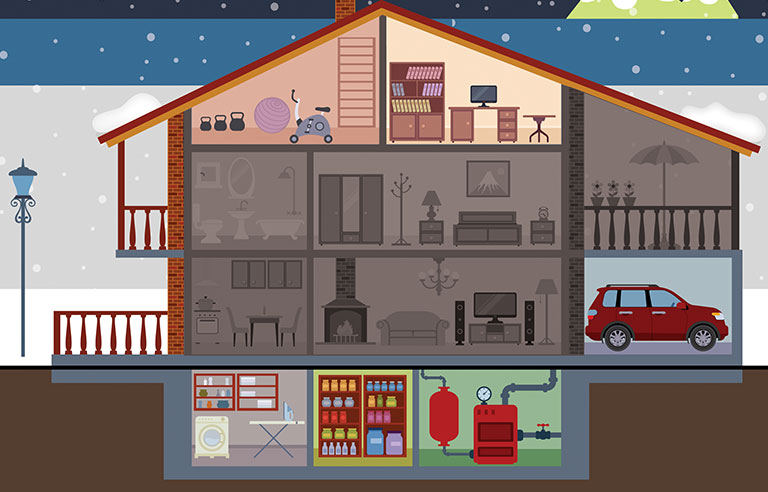
That’s just one reason why Lesh advises homeowners or tenants to use extra caution in areas that aren’t part of their daily living space. Attics, unfinished basements, crawl spaces and garages all contain safety hazards you need to watch out for.
Safety in your attic
Simply getting into your attic can be dangerous. You’ll likely need a ladder, so make sure yours is stable and in good working condition. If it has broken or missing rungs, don’t use it. You need a new one.
When storing boxes or other household items in your attic, place them away from the attic entrance – called the scuttle hole – so they don’t fall on anyone.
Other hazards:
Animals and insects: Raccoons, birds, rodents, squirrels and bats are some of the critters known to take shelter in attics. One obvious (and unpleasant) sign that you have an uninvited guest? Animal droppings.
“If you see any kind of poop, get out and get a mask,” said Lesh, who is the former executive director and president of the American Society of Home Inspectors and still serves as an ambassador for the organization. The droppings can contain viruses and be a source of disease.
Hornets, wasps or bees also are known to take up residence in attics. “That’s their territory,” Lesh said, and “you’re trapped” if you get caught off guard by them while up in your attic.
Experts recommend hiring an animal or pest control specialist to remove these unwanted houseguests rather than doing it yourself.
Excessive heat: Most attics lack ventilation systems, so heat can build up quickly during the summer months.
“I’ve seen attics as hot as 140 degrees,” said Nick Gromicko, founder of the International Association of Certified Home Inspectors.
Staying too long in a hot attic can lead to heat exhaustion and other more serious illnesses such as heat stroke. Lesh suggests asking someone to monitor you while you’re working in the attic to make sure you’re OK.
Insulation: Some of that heat buildup can be attributed to fiberglass insulation, which has been known to cause skin, eye and breathing problems in people with allergies.
And it doesn’t happen only in the movies: Insulation can cover up ceiling joists or other areas where you need to step to avoid falling through the ceiling below. Make sure all joists and pathways are clear of insulation and other tripping hazards.
Basement safety
Unfinished basements typically have more hazards than finished basements. A major problem, Lesh said, is dampness, which can create electrical hazards – especially if your furnace or circuit breaker panel is on this level of your home. He recommends wearing rubber-soled shoes if you’re planning on doing electrical work, and upgrading to ground fault circuit interrupter, or GFCI, outlets.
Whether your basement is finished or unfinished, Gromicko said you should be particularly careful when using basement stairs. Make sure the stairwell is well-lit and the handrail is securely attached to the wall.
Safety in the crawl space
Standing water and dampness are big concerns in crawl spaces, experts say. Electricians may have run wires through your crawl space, and if any are faulty and moisture is present, you could be electrocuted – especially if you’re using metal tools or if you touch any ductwork.
Lesh said inspectors won’t go into a crawl space if they see standing water.
Additionally, unwelcome animals – including snakes – can pose the same hazards in crawl spaces as they do in attics.
“Snakes can get in almost anywhere,” Gromicko said.
Added Lesh: “There can be a lot of germs from feces or decaying feces.”
Finally, as Lesh can attest, exposed nails sticking out from the top of crawl spaces can be just as painful as those in attics.
Garage safety tips
One of the biggest hazards in garages are the heavy doors, especially if safety devices such as photoelectric sensors aren’t properly installed or working. These sensors – located at the base of each side of the garage door and emitting and detecting beams of light – should be installed no more than 6 inches above the standing surface, Gromicko said.
The Consumer Product Safety Commission recommends testing the sensors once a month to make sure the door reverses when the beam of light is broken by an object.
“If the door fails to reverse, adjust the door according to the owner’s manual or have it inspected by a professional repairman,” the CPSC says.
Carbon monoxide is another potential fatal hazard, especially in attached garages. People have died when their vehicles with keyless-start ignitions have been left running inadvertently.
If your furnace is in the garage, it can draw your vehicle’s exhaust into your home, Lesh cautioned. Prevent this by moving your vehicle outside the garage when it’s idling.
And although garages are great for storing items you don’t want in the house, boxes and other items shouldn’t be stacked in a way that could make them topple over.
Finally, be sure to keep a close eye on young children when they’re in the garage.
“Always assume children might try to climb your stored items and shelving,” Gromicko said.