


The information brought to light by OSHA investigations can help prevent similar incidents – and, in turn, injuries and deaths – from happening.
Our initial coverage of OSHA’s annual “Most Interesting Cases” in December 2022 was so well-received that we’ve brought the topic back for another round. Here are the latest cases, presented during the 2023 NSC Safety Congress & Expo in October.
The panel for the technical session included:
- Clinton Girton, whistleblower investigator in OSHA’s Region 6
- Jennifer McWilliams, safety engineer in OSHA’s Region 4
- Terri Irvin, a compliance assistance specialist in the Baton Rouge, LA area office, was scheduled to present but was unable to attend the session. Safety+Health acquired Irvin’s portion of the presentation.
Here are the cases they presented.
Page 2 of 4
CASE #1
Death related to unguarded machinery
An employee of a polypropylene product manufacturer was killed after she was pulled into a roller machine.
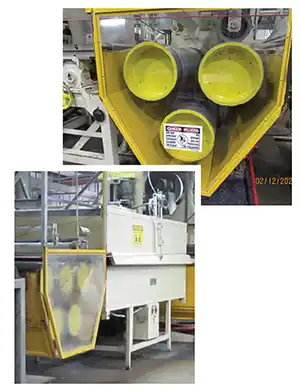
As part of the abatement process, the employer enclosed the rollers that had no guarding.
The worker was instructed to reach into the machine to cut “wraps,” which would occur when a polypropylene fiber strand being pulled through the process broke and then balled or rolled up on the roller itself. This could cause production to stop. Employees would use handheld scissors or knives to cut wraps while the machine was running.
During an inspection, OSHA observed rollers without adequate guards or guards that were left in the up position. The employer didn’t require employees to pull down the guards, when they were available, and didn’t train workers on lockout/tagout procedures.
In the three years before the inspection, the employer had 15 recordable cases involving employees working near the rollers. In six of those cases, fingers, hands or hair were caught in or between the polypropylene web and/or the rollers. The rest involved cuts that happened while employees were attempting to remove wraps from the rollers.
OSHA/legal actions: The agency cited the employer for 16 violations, including eight serious violations, with fines totaling $195,144. The employer paid $155,338 in penalties after a settlement.
The family of the victim was awarded $3 million in a wrongful death suit, and the company pleaded guilty to federal charges, resulting in an additional $410,856 in fines and restitution.
Resolution: The employer abated all hazards identified by OSHA.
That included developing long-reach tools so employees could cut wraps while staying out of the danger zone. Interlocks were installed so the machine stops if a guard is opened, moved or changed. The rollers with no guarding were enclosed to keep workers from reaching into the nip point, “except where the web had to enter and exit the rollers.” Additionally, the employer conducted lockout/tagout training for all employees.
Lessons learned:
- Don’t bypass safety for production.
- Complete a risk assessment and eliminate or mitigate identified hazards.
- Train all employees on the hazards of a process and how to prevent exposures.
- Investigate incidents and take actions to prevent a recurrence. Inaction is a willful violation.
Page 3 of 4
CASE #2
Heat-related death
An archaeological worker died of a heat-related illness on her first day on the job.
On July 11, 2022, a four-person crew was working on a dig in Louisiana’s Kisatchie National Forest as the temperature reached 98° F. The heat index reached as high as 107° F during the six-hour survey project.
The company, which also specializes in historic preservation, had no acclimatization process for employees. Additionally, supervisors and co-workers didn’t have the knowledge and training to recognize symptoms of heat-related illness.
The company’s heat safety plan for the site only briefly mentioned rest “when needed” and no work/rest schedule was established. Also, the employer had no provisions for a cool rest area.
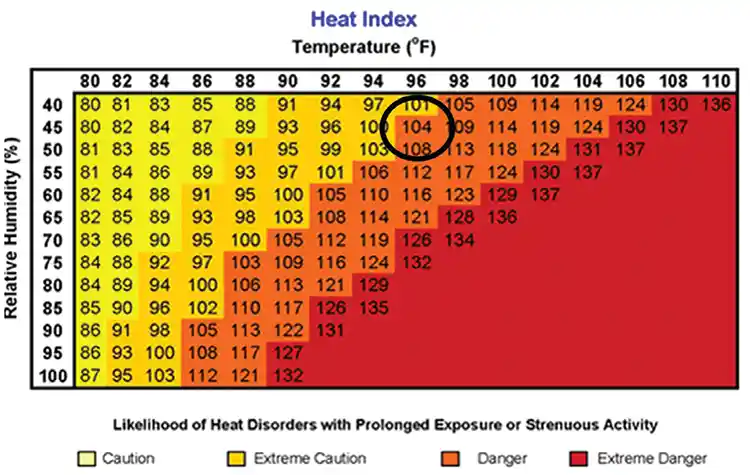
The heat index reached as high as 107 F on the day of the incident.
OSHA/legal actions: Because OSHA has no standard on heat exposure, the agency cited the employer under the General Duty Clause, or Section 5(a)(1) of the Occupational Safety and Health Act of 1970. The serious violation resulted in a $13,052 fine. That was reduced to $10,442 after an informal settlement.
Resolution: The employer revised its heat-related illness prevention program. Those changes included monitoring the work environment as well as establishing work/rest schedules, acclimatization procedures and annual training.
Page 4 of 4
CASE #3
Whistleblower case
An office worker/dispatcher for a tow truck company in Arkansas was exposed to dust, debris, paint fumes, rat droppings and dead rats during office renovations.

The employee shared this photo as an example of the unsafe working conditions.
The worker participated in several protected activities under Section 11(c) of the OSH Act. She complained about the conditions to her supervisor and asked for personal protective equipment, to no avail.
She then filed a complaint with OSHA and was fired 24 hours after agency personnel contacted the company. In response, she contacted OSHA’s Whistleblower Protection Program.
Girton, who’s authorized to settle complaints as a whistleblower investigator, got the company to agree to give the employee her job back and approximately $800 in back pay. The company also was instructed to refrain from further retaliation.
That didn’t happen. Instead, the employee was stripped of her responsibilities, made to sit at a child-sized desk and not allowed to use her personal cellphone (unlike other employees). She was also told to take notes on “general operations of the company” and give them to a supervisor, who crumpled them up in front of her and threw them away. Additionally, the employee was belittled for her appearance.
Girton said these actions are known as “constructive discharge,” or the creation of a hostile environment that pressures or coerces an employee into quitting.
Resolution: Aiding the investigation, the employee recorded all conversations on a smartwatch (Arkansas is a one-party consent state). That “mountain” of evidence allowed her to settle a lawsuit with her former employer for $50,000.

