

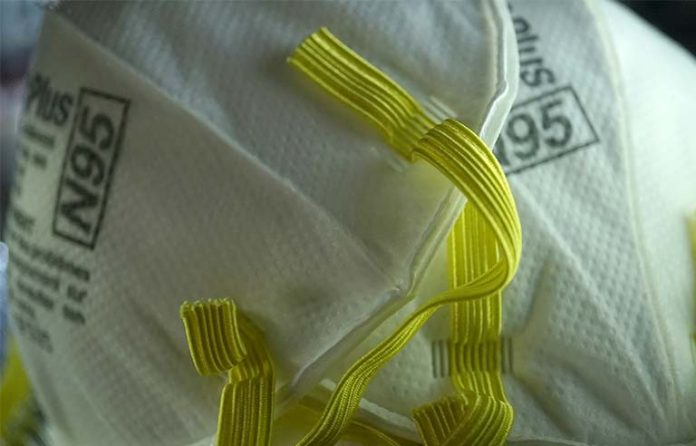
Boston — Common types of N95 respirators – widely used by health care professionals providing direct care to patients with COVID-19 – can be safely reprocessed up to 25 times to help augment supplies during future pandemics, results of a recent study by Boston researchers suggest.
Researchers at the Beth Israel Deaconess Medical Center and the Massachusetts Institute of Technology serially reprocessed seven different kinds of N95 respirators with vaporized hydrogen peroxide, a standard decontamination strategy. After each reprocessing, they conducted a series of qualitative and quantitative tests to evaluate both the function and effectiveness of the respirators on human subjects. The tests involved a user seal check, fit testing and filtration efficiency testing.
Results show that after 25 decontamination cycles, the respirators maintained at least 95% filtration efficiency while passing 25 user seal tests, eight quantitative tests and four qualitative fit tests. Even after the 20th and 25th cycles, the researchers note, the changes in filtration rates weren’t statistically significant.
During the COVID-19 pandemic, health care facilities experienced N95 mask shortages that forced them to re-use respirators or choose less protective masks.
“It is important that we now find ways to scale and translate this capability to smaller hospitals and resource-limited health care settings that could benefit just as much – perhaps more – from this type of personal protective equipment reprocessing in future disaster scenarios,” Christina F. Yen, an infectious disease physician at Beth Israel, said in a press release from the Association for Professionals in Infection Control and Epidemiology.
Yen and her colleagues point out that a successful, large-scale implementation of this type of reprocessing will require planning and coordination, multidisciplinary teams to ensure disinfection efficacy and end-user safety, and significant logistical support.
The study was published online Jan. 5 in the American Journal of Infection Control, a publication of APIC.

